

Key Points:
- Skills assessment in autism helps track development and tailor therapy.
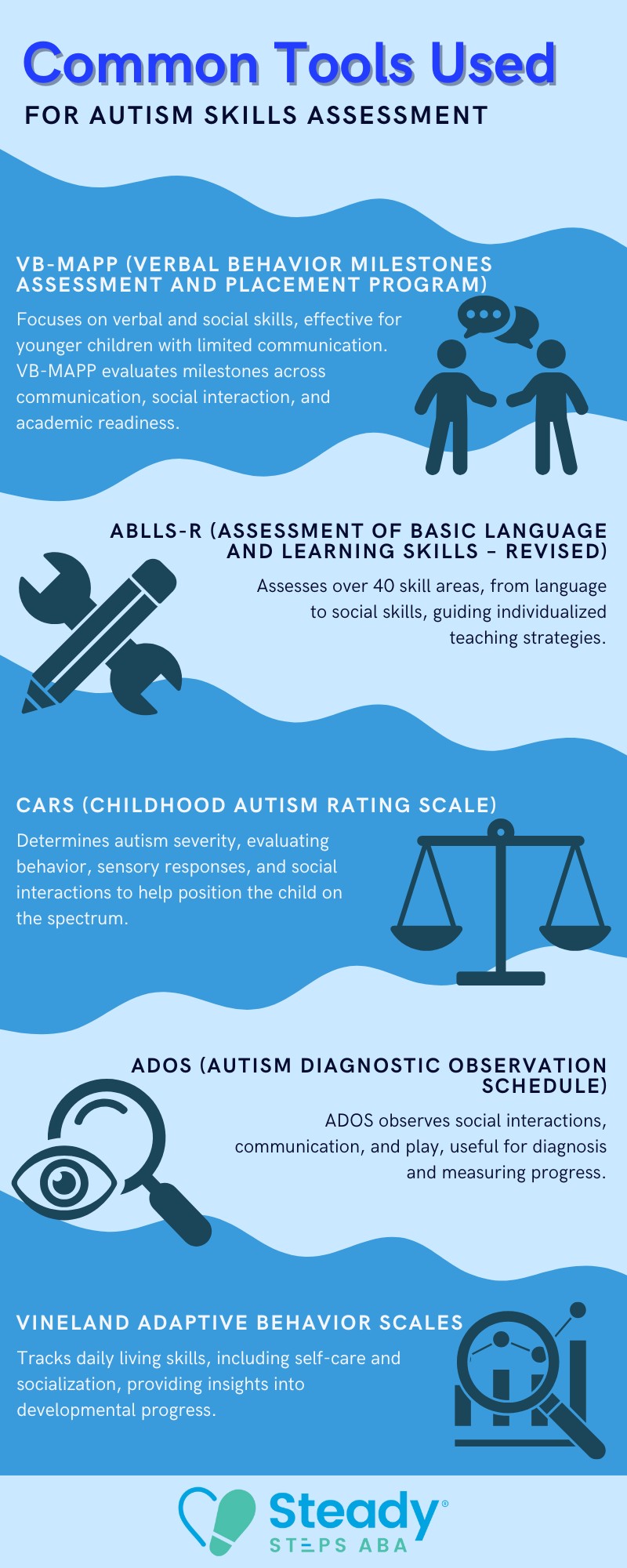
- Common tools include the VB-MAPP, ABLLS-R, and the CARS.
- These assessments guide personalized treatment plans in ABA therapy.
One of the most critical components in supporting children with autism is a skills assessment autism. This process helps parents, therapists, and educators understand a child’s strengths and areas needing support. By using these assessments, therapy can be more targeted and effective, helping children build essential life skills. Let’s explore the tools and techniques used to assess skills in children with autism and how these assessments benefit therapy!
What is a Skills Assessment for Autism?
A skills assessment autism is a structured process designed to evaluate the abilities, challenges, and developmental milestones of a child with autism. The goal is to identify both strengths and areas that need improvement, forming the foundation for creating a personalized treatment plan. These assessments focus on various domains, such as social skills, communication, self-help abilities, and academic knowledge.
Why is Skills Assessment Important for Children with Autism?
Understanding a child’s strengths and weaknesses is crucial for effective intervention. Without a proper assessment, it’s easy to miss key areas that may require attention. Here’s why skills assessments are important for children with autism:
- Individualized Treatment Plans
A skills assessment helps professionals create tailored therapy plans that are specific to the child’s needs. Without this step, therapies may be too generalized, and progress may be slower. - Tracking Progress
With clear benchmarks in place, it’s easy to see where a child is excelling and where they may need additional support. This helps clinicians make necessary adjustments to therapy. - Measuring Success
Assessments offer a way to measure the effectiveness of interventions. By reviewing a child’s progress over time, adjustments can be made to ensure the goals are being met.
There are several tools used by behavior analysts and therapists to assess skills in children with autism. These tools provide valuable data that is then used to guide the child’s therapy. Here are some of the most widely used assessments:
How Does a Skills Assessment Help ABA Therapy?
A skills assessment autism sets the foundation for Applied Behavior Analysis (ABA) therapy. By pinpointing the child’s specific needs, ABA therapists can design interventions that focus on the child’s unique challenges. Here’s how these assessments help in shaping therapy:
- Personalized Interventions
ABA is most effective when tailored to the child’s specific needs. Skills assessments help identify target behaviors and areas that require focus, ensuring the therapy addresses the child’s individual goals. - Data-Driven Decisions
ABA relies heavily on data to track progress. Skills assessments provide clear, measurable data that clinicians can use to monitor success and make adjustments. - Maximizing Progress
By evaluating the child’s abilities across multiple domains, therapists can help children make faster and more consistent progress in the areas that matter most.

When Should Skills Assessment Be Done?
Skills assessments are not a one-time activity; they should be performed at various stages of a child’s development to ensure the therapy remains effective. The most common times for skills assessments are:
- At the Start of Therapy
Before beginning any intervention, an initial skills assessment is conducted to establish a baseline for the child’s abilities. - After Major Milestones
After key developmental milestones, it’s important to reassess to ensure the child is progressing and ready for new challenges. - At Regular Intervals
Periodic assessments help track progress over time, ensuring the therapy remains aligned with the child’s needs. - When Goals Are Achieved
Once the child meets specific therapy goals, reassessments can help determine new goals and objectives for further development.
How Parents Can Get Involved in the Assessment Process
As parents, you play a critical role in your child’s development. While the formal assessment is carried out by professionals, there are ways you can actively participate:
- Provide Observational Data
Share insights about your child’s behavior in everyday settings. Your observations help therapists gain a deeper understanding of your child’s strengths and challenges. - Ask Questions
Don’t hesitate to ask therapists and behavior analysts about the assessment process, its outcomes, and how they will influence your child’s therapy. - Reinforce Positive Behaviors at Home
Practice the strategies recommended by your child’s therapists in a consistent manner at home. This strengthens the impact of the assessment results. - Track Progress Together
Keep an eye on the progress made by regularly revisiting the skills assessment results and noting improvements.
Partner with Steady Steps ABA
The skills assessment autism process is a crucial step in helping your child succeed in ABA therapy. Whether your child is working on social skills, communication, or self-help abilities, assessments guide the way forward. They allow your child’s therapy to be tailored to their unique needs, helping them progress at their own pace.
At Steady Steps ABA, we specialize in creating individualized therapy plans based on detailed assessments and data-driven approaches. Our experienced team works with your child to develop their skills and provide ongoing support.
If you’re looking for expert ABA therapy services in Maryland, we’re here to help. We proudly serve families in Maryland and surrounding areas. Contact us today to learn more about how we can support your child’s development through personalized ABA therapy!