Key Points:
- ABA social skill activities help autistic toddlers develop communication, play, and interaction abilities through structured, fun routines.
- Parents can use simple household items to create engaging ABA therapy games that build social awareness and confidence.
- Consistent practice at home strengthens the social and emotional skills toddlers need for lifelong connections.
For many parents of autistic toddlers, one of the biggest goals is helping their child connect, play, and communicate with others. Yet social skills like sharing, taking turns, and responding to others can be challenging to develop naturally. That’s where fun ABA activities come in.
Applied Behavior Analysis (ABA) therapy offers practical strategies for teaching social skills in enjoyable, engaging ways. Through structured play and repetition, toddlers can learn how to interact meaningfully while having fun.
The best part? Many of these ABA activities at home require little to no special materials. Everyday routines can turn into opportunities for learning and laughter.
This guide explores creative ABA social skills activities you can do right at home, tailored to your child’s developmental level.
Understanding Why Social Skills Matter Early
Social skills are more than just playing with others; they’re the foundation for communication, emotional growth, and independence. For toddlers with autism, structured and repetitive social experiences can help them understand how interactions work.
Research shows that early intervention using evidence-based approaches like ABA therapy can significantly improve social communication and adaptive skills in children with autism.
By introducing activities for ABA therapy at home, parents can support the same kind of structured learning that happens in professional sessions. These consistent, play-based moments help toddlers practice essential skills like imitation, turn-taking, and joint attention, which are the building blocks of connection.
 Autism Social Interaction Activities You Can Start Today
When teaching social skills to autistic toddlers, it’s important to make the experience positive and motivating. The key is to keep things simple, consistent, and fun. Here are several autism social interaction activities that you can easily do at home.
1. Imitation Games
Imitation is one of the first ways toddlers learn social behavior. It helps build attention, connection, and understanding of others.
Try these ideas:
- Make a game of copying each other’s facial expressions or gestures.
- Use songs like “If You’re Happy and You Know It” to practice clapping, stomping, and waving.
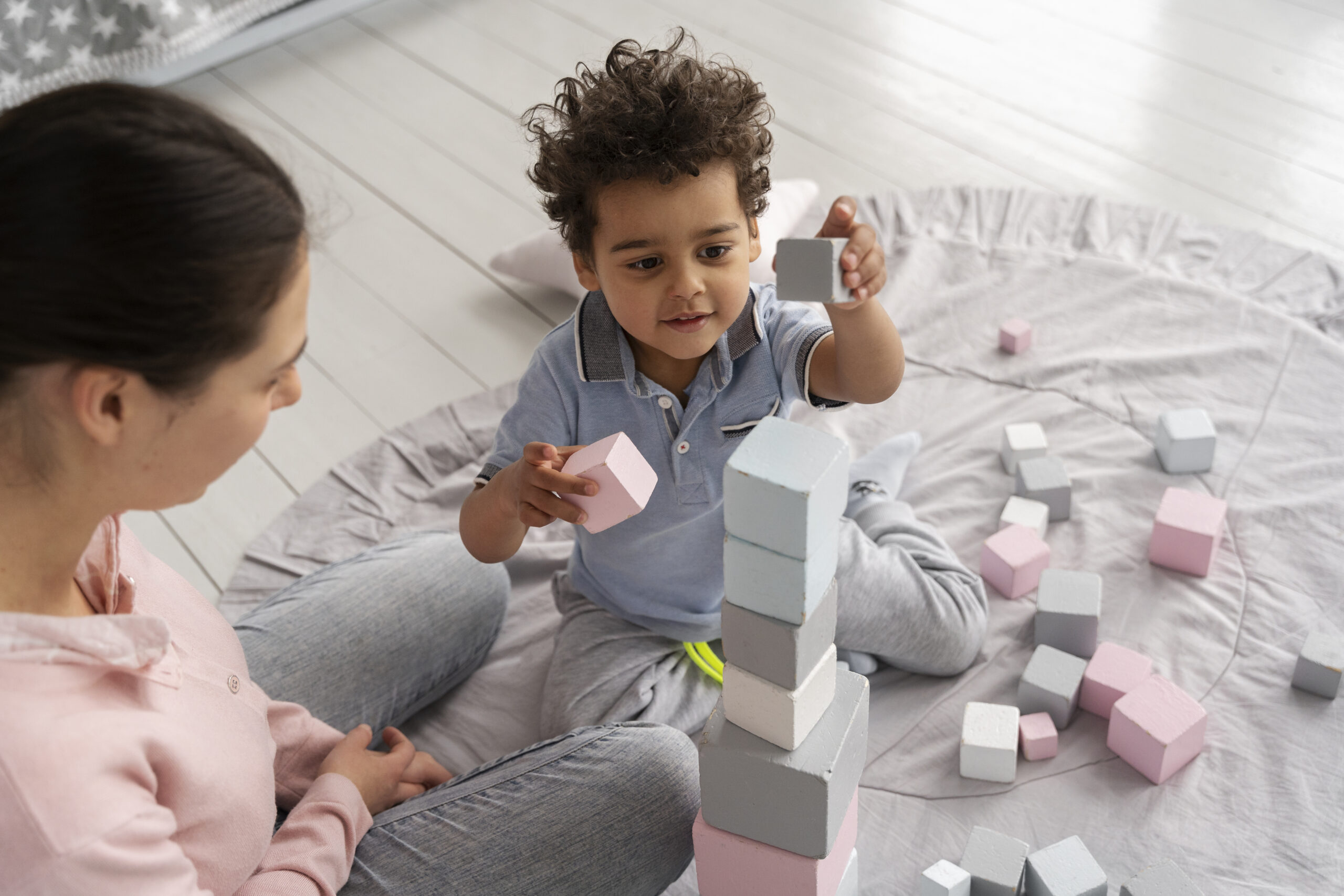
- Add objects, like stacking blocks or stirring an imaginary pot, to make it playful.
This type of social skills activity for toddlers teaches them to observe, respond, and share attention – all key elements of communication.
2. Turn-Taking with Toys
Turn-taking builds patience and awareness of others. You can use any toy that requires interaction: a ball, cars, or stacking rings.
Start by saying, “My turn,” and then, “Your turn,” clearly each time. Use visual cues, like pointing or passing an object, to reinforce whose turn it is.
Gradually, your toddler will begin to wait and anticipate their turn, making it one of the simplest yet most effective ABA activity ideas for social development.
3. Peek-a-Boo and Hide-and-Seek Variations
Peek-a-boo isn’t just a baby game; it’s a great way to build social anticipation and connection. For toddlers who may struggle with eye contact, this can make interaction feel rewarding.
As they get older, you can modify it into mini hide-and-seek games, encouraging your child to call your name or search for you. These fun ABA therapy games teach communication and awareness in a playful way.
4. Role-Play and Pretend Play
Pretend play encourages imagination and helps children understand emotions and social roles.
Try these examples:
- Playing “kitchen” or “grocery store” together.
- Feeding dolls or stuffed animals.
- Acting out daily routines like brushing teeth or going to bed.
Role-play promotes language use, emotional understanding, and cooperation—core goals in autism social skills activities.
5. Sharing and Helping Games
Toddlers with autism may not naturally share or ask for help, but ABA techniques can make these concepts clearer.
For example:
- Give your child two snacks and gently prompt them to offer one to you.
- Model asking for help when you “can’t open” a container, then let your child try.
- Praise any attempt to cooperate or share.
Reinforcing these small moments helps your toddler understand social give-and-take.
ABA Activities at Home: Turning Everyday Routines into Social Learning
Social learning doesn’t have to happen only during playtime. Everyday activities provide natural opportunities for growth.
Here are some ways to integrate ABA social skills activities into your daily routines:
- During meals: Practice requesting food items or saying “more” and “all done.”
- During dressing: Encourage your child to choose between two shirts to promote communication and independence.
- During chores: Let them “help” by putting items away or wiping the table, teaching teamwork, and following directions.
When social interaction becomes part of normal life, it feels less like therapy and more like connection.
Fun ABA Activities That Build Social Awareness
Social awareness, recognizing others’ actions, feelings, and expressions, is a skill that develops gradually in toddlers with autism. ABA therapy uses structured activities to nurture this ability.
Here are a few playful options:
- Emotion Matching
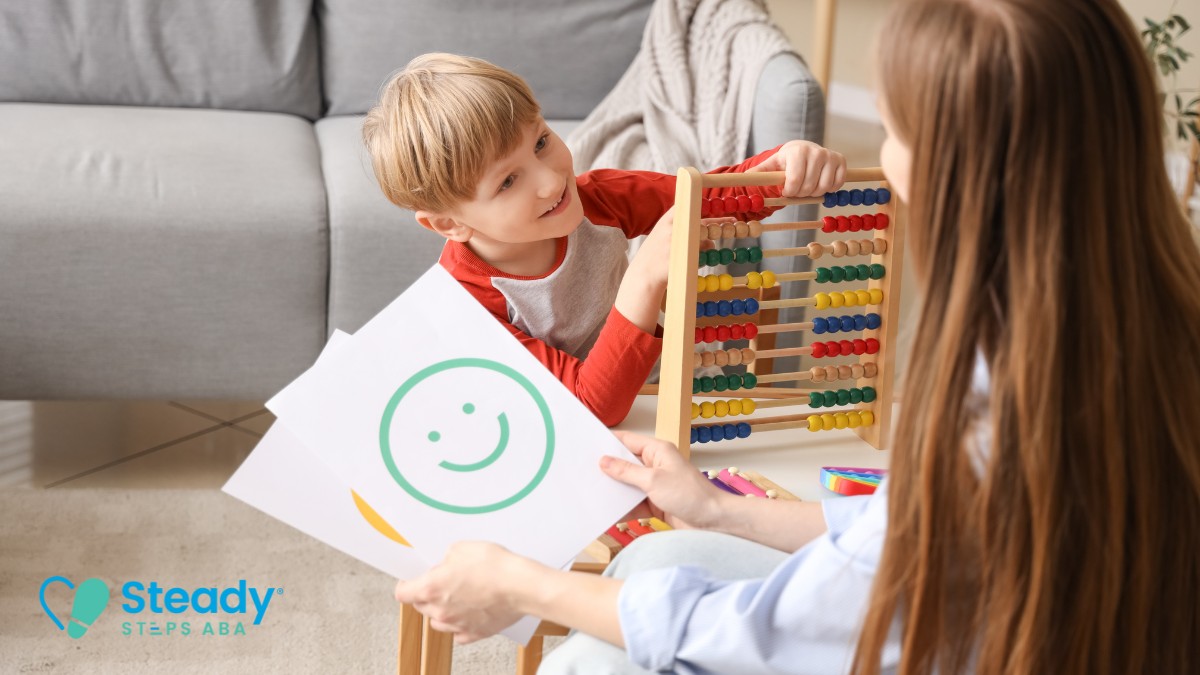
Use emotion cards or simple drawings to teach feelings like happy, sad, or mad. Then, act out the emotions together and label them aloud. - Mirror Play
Sit in front of a mirror and make faces together. This helps toddlers associate facial expressions with emotions while practicing imitation. - Follow the Leader
Encourage your child to mimic movements like jumping or waving. Start simple, and gradually add complexity as their attention improves.
These activities for ABA therapy help toddlers understand how people communicate emotions and reactions, improving both empathy and comprehension.
ABA Therapy Games That Encourage Communication
Many autistic toddlers find verbal communication challenging. ABA therapy often focuses on alternative ways to communicate, like gestures, pointing, or picture exchange systems.
To encourage communication, try these ABA therapy games:
- Request and Reward – Hold a favorite toy and wait for your child to gesture, point, or vocalize to request it before giving it to them.
- Object Naming – Name familiar items during play to build vocabulary and language comprehension.
- Sound Imitation – Make animal or vehicle sounds together to encourage vocal imitation in a fun, pressure-free way.
Through consistent play, toddlers begin to associate communication with positive outcomes, making social interaction enjoyable and meaningful.
Creative ABA Activity Ideas for Siblings and Family
Siblings play a vital role in supporting social learning. Involving them can make ABA activities feel natural and engaging.
Here are some fun ABA activities families can enjoy together:
- Simple board games like “Candy Land” or “Matching Cards” teach rule-following and patience.
- Building together with blocks or Lego encourages cooperation and shared attention.
- Dance parties promote imitation, rhythm, and shared enjoyment.
Family participation not only strengthens skills but also helps create positive memories around social interaction.

Encouraging Social Play Outdoors
Outdoor settings offer new sensory and social experiences that build confidence. ABA principles can be easily applied during outside play.
Try:
- Playground exploration – Practice taking turns on swings or slides.
- Bubble play – Encourage eye contact, pointing, and joint attention as you blow bubbles and take turns popping them.
- Nature walks – Talk about what you see and encourage your child to point or comment on objects.
Outdoor ABA social skills activities help children generalize what they learn indoors to real-world environments.
Keeping It Positive and Consistent
Success in social skill activities for toddlers depends on patience, repetition, and encouragement. Each small step, making eye contact, taking a turn, or responding to a gesture, is progress worth celebrating.
Use plenty of praise, high-fives, or short breaks when your child engages appropriately. Over time, the repetition of these small wins adds up to meaningful, lasting change.
Remember, ABA is about teaching through positive experiences. The more enjoyable the interaction, the more motivated your child will be to connect.
Building Meaningful Connections Through Play
Social growth begins at home, with small, joyful moments of play and connection. By using ABA activities at home, parents can help their toddlers build foundational skills that make relationships more natural and rewarding.
Each time your child shares, imitates, or asks for something, they’re learning how to communicate with the world, and every bit of progress counts.
If you’re ready to help your child grow through structured, play-based learning, Steady Steps ABA offers individualized ABA therapy programs in Maryland. Our specialists at Steady Steps ABA focus on real-world progress, helping children develop communication, interaction, and self-help skills through fun, evidence-based activities.
Take the next step toward building your child’s confidence and connection. Contact us today to learn how our ABA therapy in Maryland can support your family’s goals for social development.