
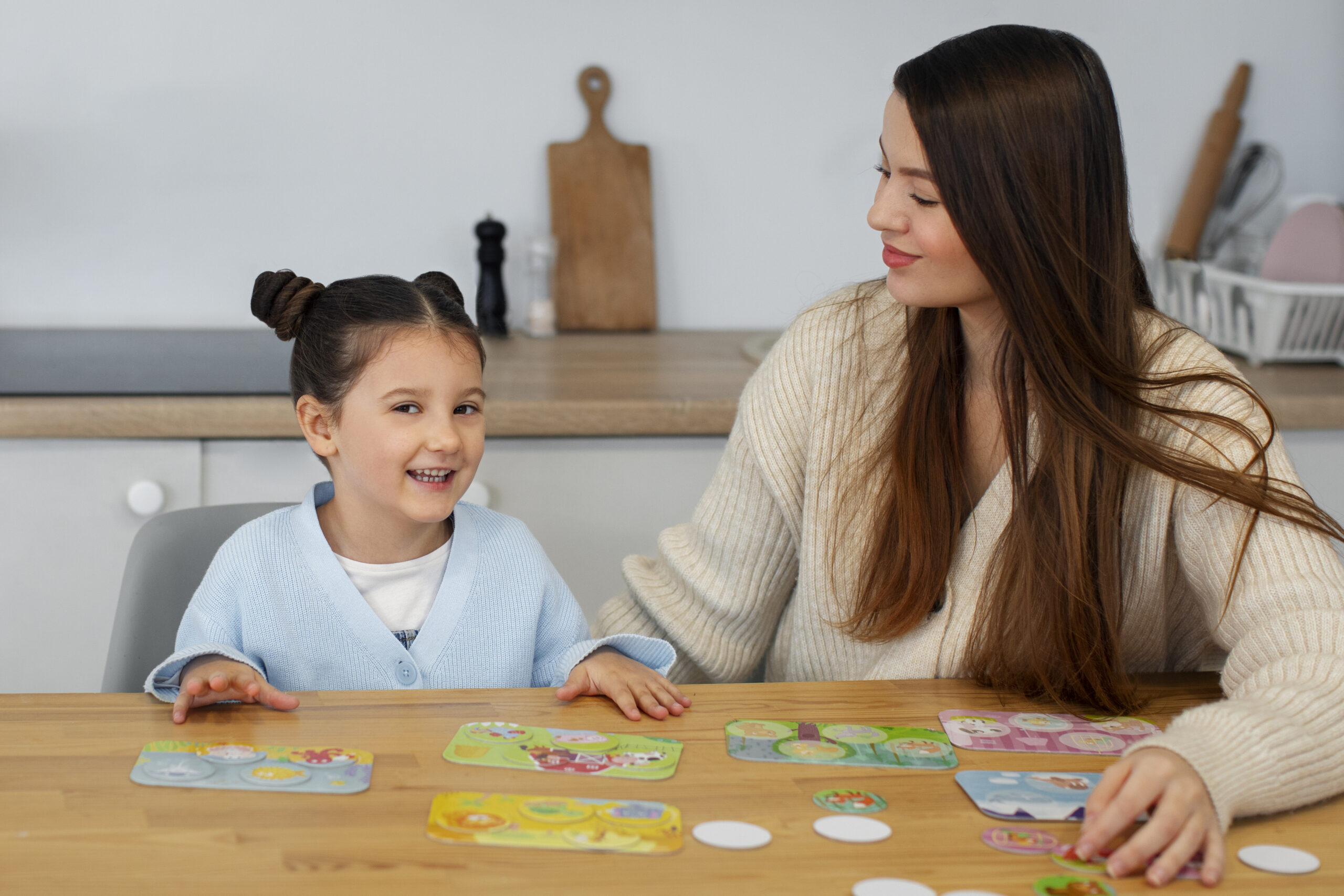
Key Points:
- NET (Natural Environment Teaching) is a child-led, play-based ABA approach that teaches skills in real-life settings, home, school, and the community, making learning meaningful, engaging, and functional.
- Skills learned through NET generalize more effectively because children practice them in natural routines, varied environments, and with different people.
- NET supports communication, social interaction, and independence, helping children with autism apply skills confidently across daily activities and situations.

Natural Environment Teaching (NET): Learning Through Play
Natural Environment Teaching (NET) is a key part of ABA therapy that helps children with autism develop meaningful skills in real-life settings. Rather than teaching skills only at a table or desk, NET embeds learning into daily routines, play, and community activities, making lessons more engaging, functional, and easier to generalize.
This child-led, motivation-driven approach promotes communication, social interaction, and independence, helping children apply skills across different environments, people, and situations.
NET as Part of a Comprehensive ABA Program
Natural Environment Teaching is often combined with structured approaches like DTT to create a well-rounded ABA therapy program. While DTT helps establish new skills, NET ensures those skills are functional, flexible, and usable in daily life.
Unlike highly structured methods like Discrete Trial Training (DTT), naturalistic approaches focus on flexibility, intrinsic motivation, and real-world application, keeping children engaged while teaching practical skills for everyday life.
By embedding learning into everyday experiences, NET supports meaningful progress and helps children with autism thrive beyond the therapy setting.

NET Strategies Used in ABA Therapy
Effective NET strategies are carefully planned, even though they appear natural and play-based. Board Certified Behavioral Analysts (BCBAs) intentionally structure the environment and interactions to promote learning while maintaining flexibility.
Common Features of NET Training
Incidental Teaching: Therapists capitalize on naturally occurring moments, such as a child reaching for bubbles, to prompt communication like requesting “bubbles” or “open.”
Following the Child’s Lead: Learning opportunities are built around activities the child already enjoys, increasing motivation and reducing resistance.
Environmental Arrangement: The environment is set up to encourage communication or problem-solving, such as placing preferred items slightly out of reach.
Natural Reinforcement: Instead of stickers or tokens, the child receives the natural result of the behavior (e.g., access to a toy, social praise).
Mand-Model Procedure: Therapists model or prompt requests in the moment and reinforce them immediately with the desired item or activity.
Pivotal Response Training (PRT): This strategy targets pivotal skills like motivation and responsiveness, which lead to widespread improvements across behaviors.
Generalization: Skills are practiced across people, settings, and activities (home, park, store) to ensure real-world use.
Benefits of NET in ABA Therapy
- Improved generalization of skills across settings and people
- Increased motivation and engagement through child-led learning
- Stronger spontaneous communication and social interaction
- Functional, real-life skill development
- Better long-term retention and independence
- Reduced frustration and challenging behaviors
- Greater family involvement and carryover at home

Natural Environment Teaching (NET) to Practice in Daily Routines & Play
Below are practical examples of NET skills parents can practice in daily routines:
1. Communication and Language Skills (Manding and Tacting)
Requesting a Snack (Mand): A child reaches for cookies placed on a high shelf. The caregiver pauses and encourages the child to request “cookie” using speech, a picture card, or sign language before providing the snack.
Requesting Help: While working on a puzzle, the therapist places a piece slightly out of reach or offers a piece that does not fit, prompting the child to say or indicate “help” or “fix.”
Labeling During Play (Tacting): During play with a toy farm, the child points to a cow. The therapist asks, “What is that?” to prompt the child to label the item.
Using Prepositions: Using toy cars or action figures, the therapist asks the child to follow directions such as, “Put the car under the table” or “on the chair.”
2. Social Skills and Play
Turn-Taking: During a game of tossing a ball or running chase, the therapist pauses to encourage waiting and taking turns, promoting reciprocity and patience.
Sharing: While two children play with blocks, the caregiver prompts one child to request a block by saying, “Can I have the red block?” to support social communication.
Greetings: When entering a store or library, the therapist prompts the child to wave or say “hi” to the cashier or librarian.
Joint Attention: On a walk, the child notices a bug on the ground. The caregiver encourages the child to point, look back at the adult, and say “look!” to share attention.
3. Daily Living and Self-Help Skills
Sorting Laundry: The child sorts clothing by color while the therapist labels and prompts identification of “red,” “blue,” or “white” items.
Setting the Table: During meal preparation, the child helps gather forks or napkins, building independence and functional responsibility.
Hand Washing: The therapist breaks handwashing into clear steps, providing prompts for turning on the water, using soap, rinsing, and drying hands.
Getting Dressed: The child chooses between two shirts, supporting decision-making and daily self-care routines.
4. Academic and Cognitive Skills
Counting During Bath Time: The child counts rubber ducks or cups as they place them in the tub.
Functional Math at the Store: While shopping, the child helps count three apples or identifies items from a short list.
Identifying Letters and Colors: During block play, the therapist asks the child to find a “blue block” or one with the letter “B.”
Sequencing Activities: While making a sandwich, the child follows steps in order: bread, peanut butter, jelly, and bread.
5. Community-Based Skills
Safety Awareness: In a parking lot or near a street, the therapist teaches the child to stop at the curb and wait before crossing.
Using Money: The child hands a card or cash to a cashier to pay for a small item, building functional math and independence.
Navigating Transitions: The child helps carry a bag to the car or puts items away, easing transitions and reducing anxiety.
Components of Effective NET
- Following the Child’s Lead: Teaching is based on what captures the child’s interest in the moment.
- Natural Reinforcement: The reward is directly related to the activity, such as getting to blow bubbles after requesting them.
- Generalization: Skills are practiced across people, settings, and activities (home, park, store) to ensure real-world use.

Generalization Skills in Autism: Why NET Works
Generalization skills in autism refer to an individual’s ability to apply learned behaviors, skills, or knowledge across different settings, people, materials, and situations. True learning occurs when a skill taught during therapy, such as using the toilet or asking for help, is used independently in real-world environments like school, home, or community settings.
Without generalization, skills may remain limited to the therapy room and lose practical, everyday value.
Key Aspects of Generalization in Autism
Contextual Flexibility: The ability to move beyond learning a skill in one specific situation and use it in others. For example, a child who learns to greet a therapist should also be able to greet a neighbor, teacher, or peer.
Stimulus Generalization: Responding appropriately to different cues that mean the same thing. For instance, understanding that “come sit,” “sit down,” and “take a seat” all require the same response.
Response Generalization: Using varied but functional responses to achieve the same goal, such as saying “I need help,” “Can you help me?” or raising a hand instead of relying on a single taught phrase.
Why Generalization Can Be Challenging
Many autistic individuals learn skills very well in structured or familiar environments, but may struggle to transfer those skills to new or changing situations. A behavior mastered in therapy may not automatically appear at home, school, or in the community without intentional teaching for generalization.
This challenge highlights why generalization must be actively planned, not assumed.
Strategies to Promote Generalization
- Vary Instruction and Materials: Teach skills using multiple examples, settings, and materials to prevent rote learning or dependence on a single cue.
- Practice in Real-Life Settings: Embed learning in natural environments such as the home, playground, store, or classroom to increase real-world relevance.
- Reinforce Skill Use Across Settings: Provide positive reinforcement when the individual uses a skill in a new or less familiar situation.
- Use Multiple Instructors: Have parents, teachers, therapists, and peers practice the same skill to reduce dependence on one specific person.
Why Generalization Is a Critical Goal in ABA
When skills fail to generalize, the impact of the intervention is limited. Promoting generalization ensures that learning is functional, meaningful, and sustainable, making it a central focus of evidence-based approaches like Applied Behavior Analysis (ABA).
Intentionally teaching for generalization using NET therapy helps autistic individuals use their skills confidently and independently in everyday life.
Connect with us today and learn from our expert-led clinicians how to support your child’s growth. Discover strategies, ask questions, and get personalized guidance.

FAQs
- What is Natural Environment Teaching (NET) in ABA?
NET is a child-led, play-based teaching approach used in ABA therapy. It focuses on teaching skills in real-life settings such as home, school, or the community, rather than in a structured clinic or at a desk. NET uses the child’s interests and daily routines to make learning engaging, functional, and meaningful.
- How is NET different from Discrete Trial Training (DTT)?
Unlike DTT, which is highly structured and table-based, NET is flexible and embedded in natural activities. While DTT focuses on repetition and discrete skill acquisition, NET emphasizes real-world application, motivation-driven learning, and generalization across settings and people.
- What types of skills can be taught using NET?
NET can teach a wide range of skills, including:
- Communication and language (e.g., requesting snacks, labeling items)
- Social skills and play (e.g., turn-taking, sharing, joint attention)
- Daily living/self-help (e.g., handwashing, dressing, setting the table)
- Academic and cognitive skills (e.g., counting, identifying letters/colors, sequencing)
- Community-based skills (e.g., safety awareness, using money, navigating transitions)
- What are generalization skills in autism, and why are they important?
Generalization skills allow a child to use learned behaviors across different environments, people, materials, and situations. Without generalization, skills may only appear in therapy sessions and not in real life. NET is particularly effective at promoting generalization by teaching skills in natural, meaningful contexts.
- How can parents support NET and generalization at home?
Parents can:
- Follow their child’s lead and use their interests to create learning opportunities
- Practice skills in different settings (home, park, store)
- Reinforce functional behaviors in everyday situations
- Involve multiple people (parents, siblings, teachers) to practice the same skill
- What are the benefits of NET in ABA therapy?
NET helps children:
- Apply skills in real-life situations
- Stay engaged and motivated
- Improve communication and social interaction
- Develop independence in daily living skills
- Retain and generalize skills across environments
- Reduce frustration and challenging behaviors